




Paros & Antiparos: Two Island Scales, One Refined Cycladic Setting
Paros and Antiparos offer two related but distinct settings for a private residence in Greece. Their shared Cycladic vocabulary of whitewashed buildings, stone boundaries and open coastal views creates a recognizable visual identity, yet the scale of the islands and their settlement patterns gives each a different atmosphere. A villa can draw on that common architectural language while remaining closely connected to its own plot, outlook and immediate residential surroundings.
The collection is most compelling when those differences are preserved. Paros provides a broader island landscape with a more varied sequence of coastal and inland settings, while Antiparos offers a more compact geographical context. Neither can be reduced to a single residential mood. The experience depends on the particular house, whether it feels embedded within an established settlement, open towards a bay or more independent within its own grounds. A private stay becomes personal through that precise relationship with place.
Paros: A Varied Island Foreground
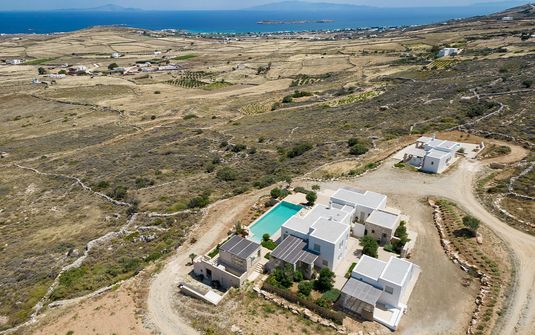
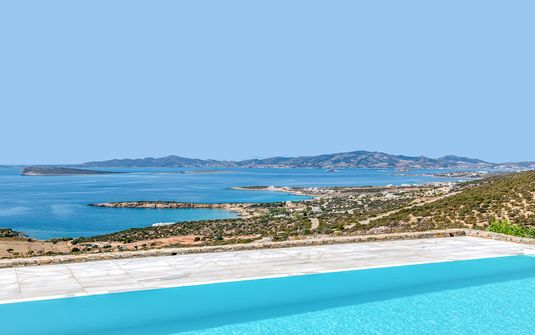
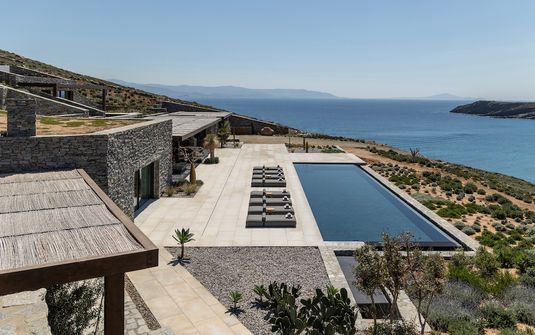
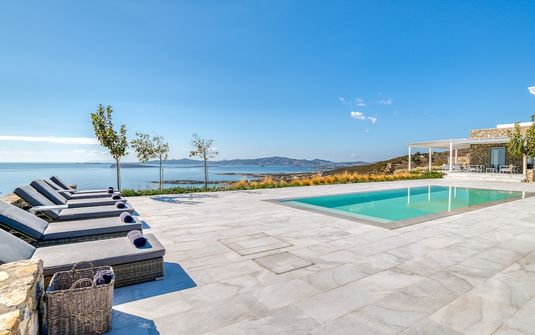
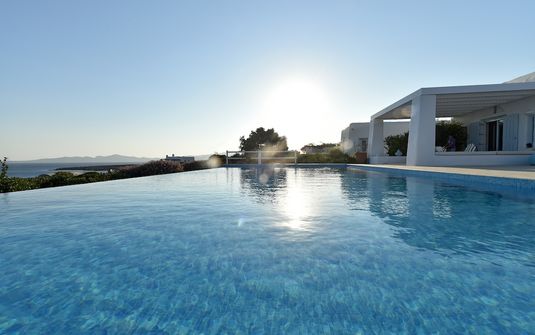
Paros gives a residence several ways to relate to the landscape. Lower hills, cultivated ground and articulated coastal settings can create a layered outlook in which the sea is accompanied by a meaningful foreground. A house may use stone terraces and planted boundaries to establish intimacy close to the rooms, while more distant contours give depth to the view. This balance allows the architecture to feel rooted in the island rather than placed before an interchangeable blue horizon.
A property near a more compact settlement has a different architectural context. Neighboring walls, rooflines and the rhythm of openings contribute to its identity, while privacy may be concentrated within a court or protected exterior area. More detached residences can offer greater separation between building volumes and a broader relationship with the grounds. These are different expressions of island life, and the suitability of each depends on how the household wishes to live together during the stay.
Antiparos: A More Concentrated Residential Landscape
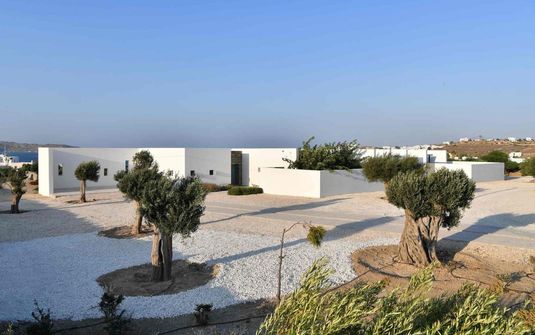
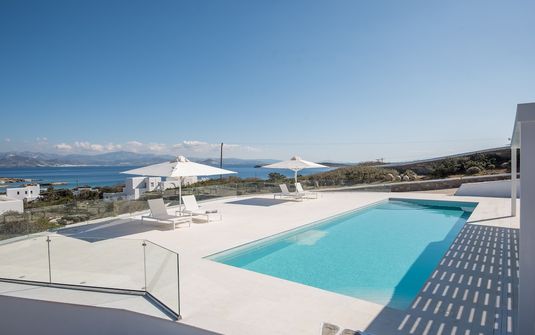
Antiparos introduces a smaller-scale island setting in which the relationship between a house, its immediate terrain and the coast can feel especially direct. The architecture benefits from restraint, allowing simple forms and carefully defined exterior spaces to establish a private atmosphere. A residence does not need a conspicuous façade to feel distinguished. Its quality can lie in the precision of a courtyard, the depth of a terrace and the way the main rooms frame a particular stretch of water.
The sense of intimacy remains property-specific. A compact island does not imply that every villa has the same surroundings or degree of seclusion. Neighboring buildings, changes in level and the orientation of windows all influence the experience. A thoughtfully arranged home gives the household protected communal areas and private rooms with considered outlooks, allowing the stay to feel independent while remaining visually connected to the island landscape around it.
White Volumes and Grounded Stonework
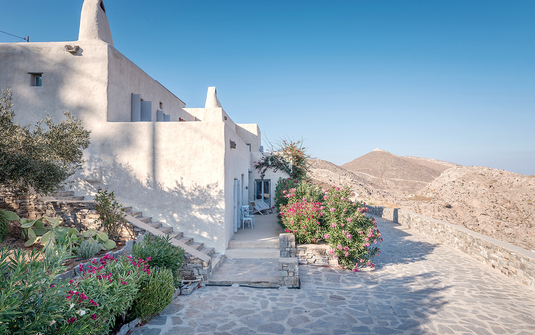
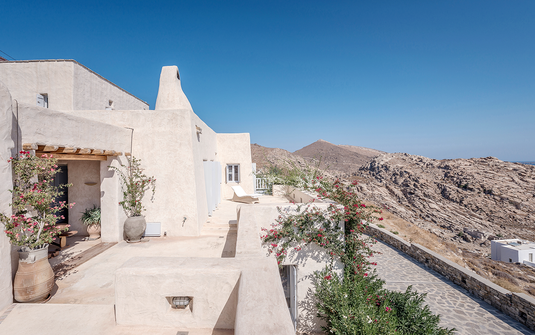
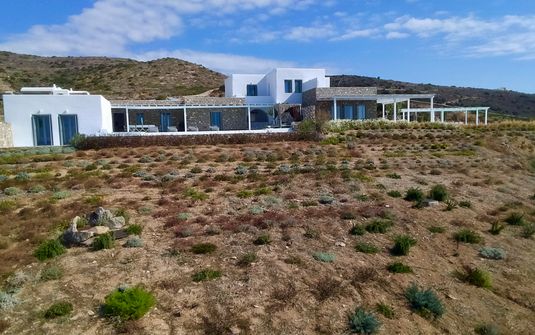
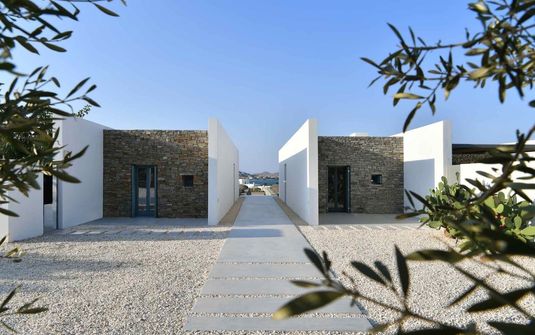
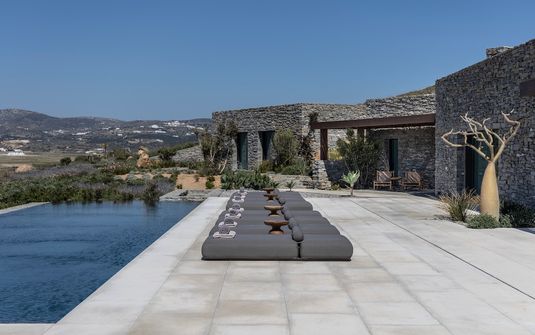
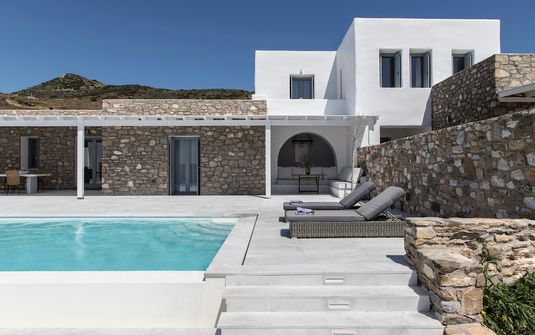
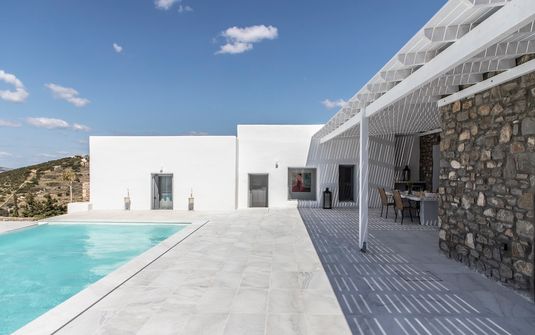
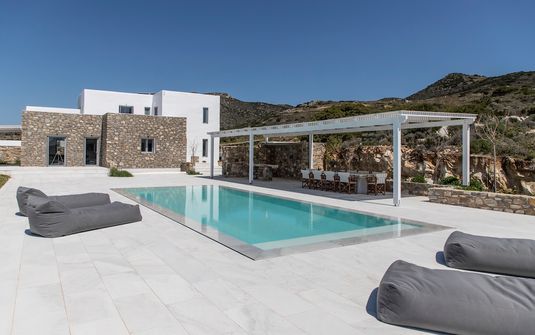
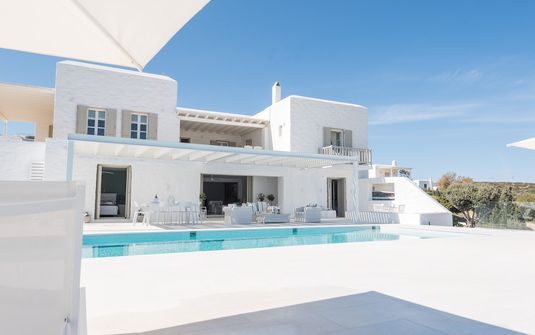
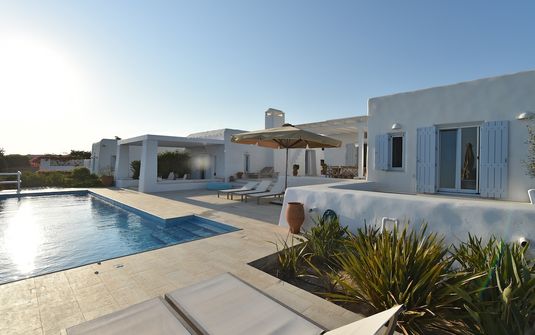
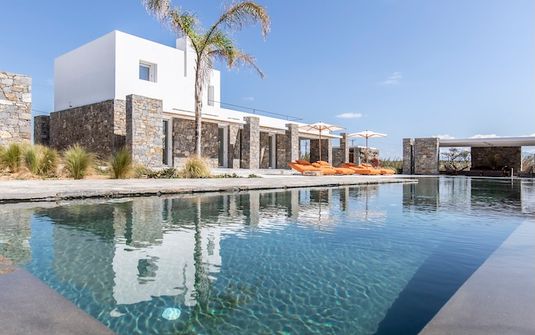
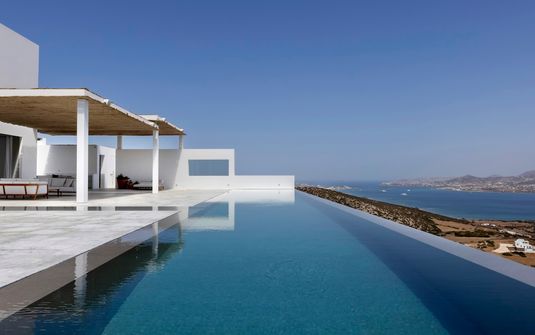
Across both islands, the strongest contemporary residences interpret Cycladic form through a clear relationship between solid walls and open spaces. Whitewashed volumes establish architectural clarity, while stonework can connect the building more closely to the terrain. The contrast is most convincing when it contributes to the plan rather than serving only as decoration. A sequence of courts, sheltered passages and terraces gives a substantial villa a more intimate scale and allows different parts of the household to retain their own spaces.
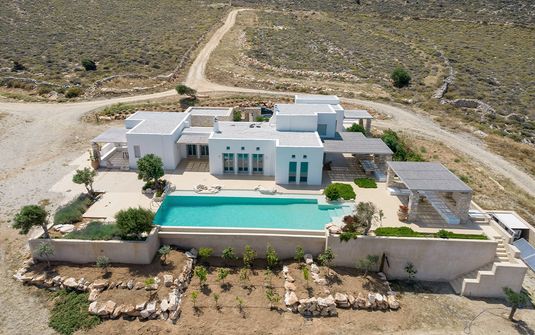
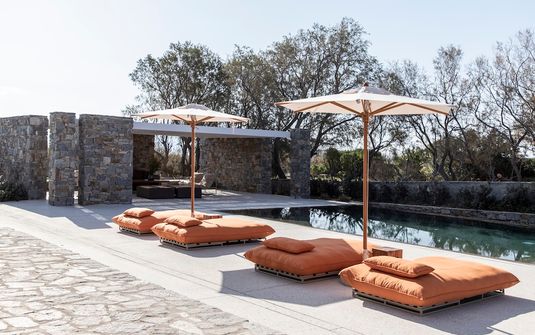
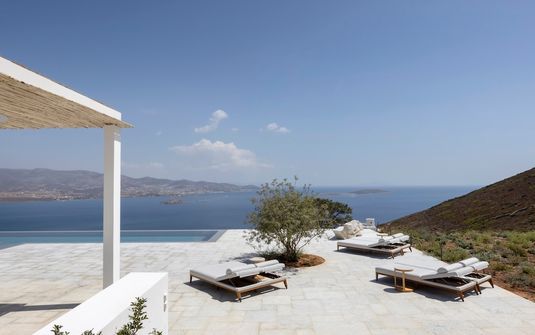
Exterior rooms are central to that composition. A covered terrace beside the principal lounge can act as a communal center, while a more enclosed court provides another degree of privacy. The grounds may remain deliberately restrained, with planting and stone boundaries introducing texture rather than competing with the view. This approach gives the residence coherence, allowing house and landscape to be experienced together instead of presenting the architecture as an isolated object surrounded by unrelated features.
Interiors Designed for a Sustained Private Stay
Natural materials and carefully proportioned furniture can bring warmth to the islands’ clear architectural forms. A restrained palette allows the outlook to remain legible, while tactile fabrics and considered joinery make the rooms feel comfortable and personal. The most successful interiors offer more than one atmosphere. A broad communal space can coexist with quieter sitting areas, giving the household alternatives rather than requiring every part of the stay to unfold within one continuous open-plan room.
Suite distribution should support the same flexibility. Bedrooms within a single main building create a closer household pattern, while independent wings or connected guest volumes offer greater autonomy. The quality of the private accommodation should remain balanced throughout. A villa feels generous when each suite has an appropriate degree of separation and a considered relationship with the exterior, not simply when one principal room offers an exceptional panorama while the rest of the house remains secondary.
An Individual Address Within a Shared Collection
Paros and Antiparos suit guests who appreciate architectural clarity and the personal scale of a complete island home. The distinction between the two islands adds meaningful choice, but the residence remains the center of the experience. Its courts, rooms and protected terraces give the household a familiar environment, allowing the surrounding landscape to become part of everyday domestic life rather than a view encountered only from the most prominent communal space.
The enduring appeal is the coherence of building, land and sea. A property that brings those elements into balance can offer privacy without excessive enclosure and openness without exposure. Whether the chosen address is on Paros or Antiparos, the result is a refined Cycladic stay with a clear sense of independence, grounded in the particular architecture and setting of the home rather than in a generalized image of island luxury.


