


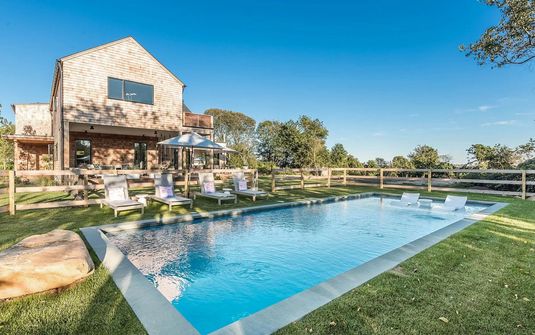
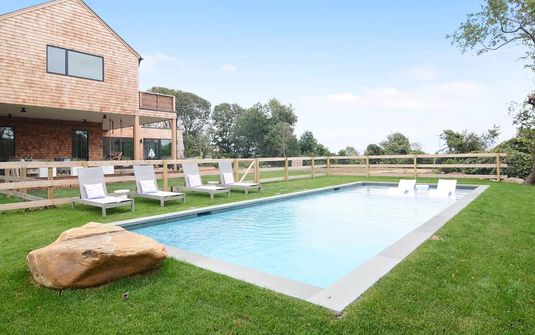


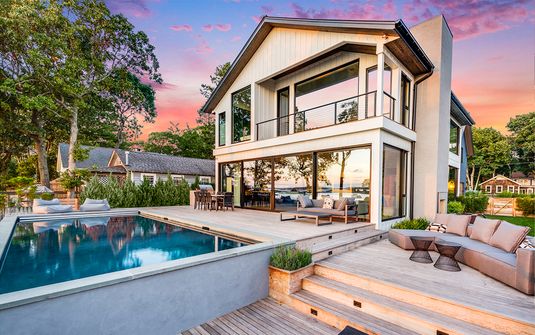
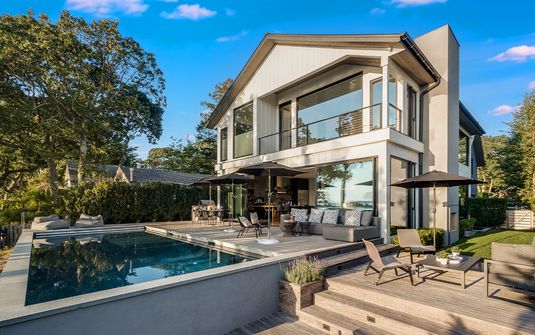
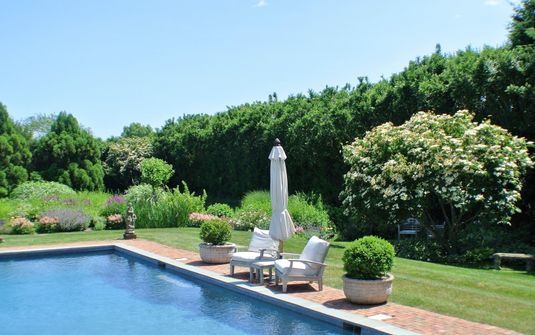
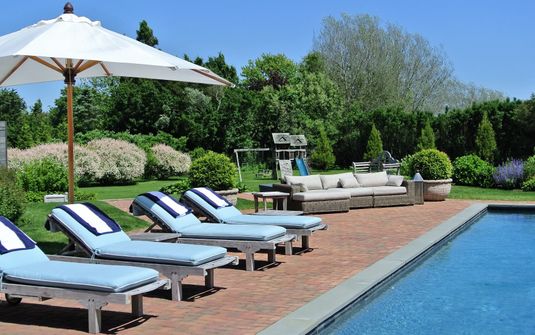
The Hamptons offer a coastal residential world defined as much by gardens, village architecture and open fields as by the Atlantic shoreline. Along the South Fork of Long Island, substantial private homes sit within a landscape where cultivated ground and maritime space remain closely interwoven. The appeal is not one uniform expression of grandeur. A shingled house within mature planting, a contemporary residence on open ground and an established village property can each convey a different form of refinement. An exceptional stay begins with that specificity, allowing the character of the home and its immediate setting to establish a private world rather than relying on the reputation of the address alone.
Within New York, the Hamptons have a particularly recognisable relationship between architecture and landscape. The ocean creates one edge of the setting, while bays, ponds, wooded areas and agricultural ground introduce other scales and atmospheres. These elements do not appear in the same combination at every property. A residence may be inward-looking and garden-focused, or it may place a broad coastal horizon at the centre of its plan. The most considered choice recognises those differences, distinguishing a house with a specific relationship to the shoreline from one whose appeal lies in its grounds, architecture or established residential surroundings.
A Landscape Between Ocean and Cultivated Ground
The Atlantic side of the South Fork can create a particularly expansive residential setting. Broad horizons and the low forms of the coastal ground give houses a strong horizontal context, making the relationship between building and land especially visible. A residence in this environment may use a restrained silhouette or articulated volumes to avoid overwhelming its site. Yet proximity to the ocean does not describe every aspect of the property. A distant water outlook, an adjoining coastal boundary and direct frontage are distinct conditions. The quality of a stay depends on understanding which relationship is genuinely present and how the architecture makes use of it.
Inland, open fields and carefully maintained grounds provide another defining Hamptons composition. Here, the eye may travel across cultivated land before reaching a line of trees or a distant roof, creating a sense of breadth without an ocean view. A house can feel deeply connected to the destination through this landscape alone. The foreground becomes important: a simple lawn, a planted boundary or a garden wall can establish the scale at which the residence meets the wider ground. The strongest architecture makes that transition feel deliberate, allowing a substantial home to remain composed within a setting whose appeal often lies in its openness and visual clarity.
Bays and ponds introduce more enclosed water landscapes. Their outlooks can feel intimate and layered, with opposite shores, vegetation and nearby landforms remaining part of the view. This is a different atmosphere from an open Atlantic horizon, not a lesser version of it. A residence facing such a setting may gain character from the relationship between water and garden, or from the way windows frame a particular shoreline composition. The best description remains precise about the property rather than extending the destination's coastal identity into assumptions about access, frontage or private features that may not belong to the house.
Villages and Their Residential Character
Southampton and East Hampton are associated with established residential landscapes in which architecture, mature trees and gardens form a recognisable whole. A house within that fabric may derive much of its appeal from continuity: the proportion of its frontage, the scale of nearby buildings and the quiet enclosure behind its boundary. This can create a sophisticated contrast between a composed public face and a much more personal private interior. The residence belongs visibly to an enduring village setting, yet its rooms and gardens can feel self-contained. For guests who value architectural context as much as a broad view, that relationship can be especially rewarding.
Bridgehampton, Water Mill and Sagaponack illustrate other aspects of the South Fork's residential landscape, where open ground and substantial private properties can create a more spacious visual field. The precise character varies by site, and the name of a community should not be treated as a guarantee of seclusion or a particular outlook. A house may occupy a planted enclave, address a broad foreground or sit within a more established cluster of residences. Understanding those immediate conditions is more useful than relying on a general hierarchy of addresses. The most compelling home is the one whose setting and architecture support the atmosphere the guests wish to inhabit.
The Hamptons' shingled architecture can express considerable scale without losing a domestic character. Rooflines, porches and projecting volumes break a large building into more legible parts, while natural surfaces help it sit comfortably among gardens and trees. The quality lies in proportion and detail, not simply in the presence of shingles. A carefully designed façade can feel assured with relatively little ornament, and a well-scaled entrance can establish warmth without a monumental gesture. The strongest houses carry this coherence through the interior, ensuring that their residential character is more than an exterior image applied to an otherwise generic luxury plan.
Contemporary Homes Within a Coastal Setting
Modern residences offer a different interpretation of Hamptons space. Low volumes, clear structural lines and carefully directed glazing can establish a strong relationship with open ground or a distant horizon. The most successful designs are selective about transparency. A principal living room may address the landscape broadly, while bedrooms and quieter interiors remain protected through their orientation or the use of more solid surfaces. This creates a residence that feels connected to its surroundings without becoming indiscriminately exposed. It also allows different rooms to have distinct identities, making the house more rewarding than a single repeated panoramic gesture expressed at several scales.
Material restraint can give a contemporary house considerable warmth. Timber, stone and textured fabrics may soften precise architectural forms without obscuring them, while a measured palette allows the landscape to remain present. The interior should feel individual rather than anonymous, with art and personal objects contributing where they belong to the actual home. A residence need not reproduce familiar coastal imagery in every room to feel rooted in the Hamptons. Its proportions, garden relationship and handling of natural materials can establish that connection more convincingly, creating a cultivated atmosphere that remains relaxed enough for guests to inhabit with ease over a longer stay.
Older residences can offer another kind of depth through the sequence and individuality of their rooms. A distinctive stair, a well-proportioned sitting room or a garden-facing porch may give the house a memorable character that cannot be reduced to floor area. Thoughtful interiors can preserve those qualities while creating a clear and comfortable residential experience. The aim is not to make every space identical in style or scale, but to allow variation to feel coherent. In the Hamptons, a house often becomes more persuasive when its quieter rooms receive the same care as the principal interior intended to establish the first impression.
Gardens as Part of the Architecture
Mature grounds are often central to the experience of a Hamptons residence. Trees, hedges and planted edges can create a sequence of private spaces, allowing a substantial property to feel intimate at the scale of the house. A formal lawn may provide a broad foreground, while a more enclosed garden offers a quieter setting close to the interior. These differences give the grounds a residential purpose beyond visual display. Their quality depends on the relationship with the building and the privacy they actually provide, not simply on the extent of the land or the complexity of the landscape design.
Discretion requires an understanding of actual sightlines. A large parcel may still have exposed principal spaces, while a village residence can feel remarkably private through its boundaries and orientation. The position of neighbouring houses, the arrangement of terraces and the relationship between bedrooms and shared exterior areas all affect the stay. A gate or a celebrated address does not resolve those questions on its own. The finest properties use architecture and landscape together, protecting personal spaces while allowing selected outlooks to remain open. This creates a more convincing private atmosphere than a broad claim of exclusivity unsupported by the way the home is actually arranged.
Within the residence, several distinct sitting areas can make a substantial house feel more complete. A broad principal room may provide the shared centre, while a library, den or smaller garden-facing space offers a different scale of occupation. Bedroom wings can provide independence, but the best arrangement depends on the guests rather than on a universal preference for separation. The aim is a home that supports both company and retreat, allowing people to spend time together and withdraw naturally. A well-resolved plan makes the property's size feel generous rather than demanding, avoiding the impression that every room must be occupied for the house to feel comfortable.
Exterior Rooms With Distinct Atmospheres
A porch, terrace and enclosed garden can each create a different relationship with the setting. The porch offers a more sheltered threshold, the terrace may extend a principal room towards a broader view and the garden can provide a quieter, more inward atmosphere. The strongest residences make these distinctions deliberate, giving each exterior space a clear role within the overall plan. Pools or other specific features, where genuinely present, should be understood in that same architectural context rather than treated as assumed components of every home. The result is a property whose exterior life feels as carefully composed as its interior rooms.
The choice between a coastal outlook, an established village setting and a more expansive garden property should shape selection from the beginning. These are different residential experiences, not simply variations in prestige. A house that feels connected to a recognisable community may be deeply appealing to one group, while another may prefer a more self-contained landscape. The most rewarding residence aligns its immediate surroundings with the intended atmosphere of the stay. Its distinction comes from clarity: a coherent architecture, an accurately understood setting and a plan that allows guests to enjoy both the shared generosity and the personal privacy of a private home.
A Distinctive American Coastal Address
Within the United States of America, the Hamptons occupy a particular place through the close relationship between coastal land, cultivated grounds and established residential architecture. Their finest homes do not need to declare their importance through excess. They can express refinement through the proportion of a room, the maturity of a garden or the precision with which a view is framed. For discerning guests, this creates a more enduring kind of appeal than a collection of isolated features. The residence becomes a specific way of inhabiting the South Fork, with a character that is recognisable in its setting and individual in the way it is experienced.
Luxury Villas in the Hamptons
An exceptional Hamptons villa brings landscape, architecture and private life into a clear relationship. Whether it is shingled and garden-focused or contemporary and outward-looking, the home should feel coherent from its entrance to its quietest rooms. Its coastal relationship must be accurately understood, its boundaries should support real discretion and its interiors should offer variety as well as space. The lasting luxury lies in a residence that feels both cultivated and personal: a distinctive private world within the South Fork, where the character of the land and the quality of the home reinforce one another without relying on spectacle or repetition.


