




Lucca: Private Residences Between a Walled City and Established Villa Country
Lucca offers two related residential perspectives within Tuscany: the architectural enclosure of an established walled city and the more expansive setting of villas in the surrounding country. A private stay can draw its character from either one. An apartment or town residence belongs to a compact built landscape, while a detached villa may use gardens, an approach and a substantial façade to establish a more independent domestic world. Their distinction lies in the way the household inhabits the place, not simply in the amount of space available.
Within Italy, the Lucchese setting is especially compelling for guests who value proportion and continuity. The architecture can be richly historical without requiring an entirely ceremonial atmosphere, and the land beyond the city provides another scale of residence through mature grounds and more distant hill contours. The most convincing home preserves its particular identity, allowing urban rooms and country-house interiors to remain different experiences rather than presenting the same decorative idea behind two unrelated façades.
The Intimacy of the Walled City
The city’s enclosed form gives private addresses a recognizable external context. Neighboring buildings, courts and rooflines create a layered outlook that is not dependent on one expansive panorama. A residence can reveal its character through an entrance passage, a stair or the sequence between principal rooms. The household then encounters Lucca at a domestic scale, with the proportions of the building and the texture of its immediate surroundings becoming part of everyday occupation rather than a backdrop seen only from outside.
Rooms facing a street or square have a different relationship with the city from those directed towards an internal court. That variation can give a substantial apartment useful depth. A principal salon may feel more outward-looking, while a quieter sitting room or suite has a more contained perspective. The most comfortable plan gives those spaces clear roles, allowing the household to choose among different atmospheres without treating every inward-facing room as secondary simply because its view is less extensive.
The Country Villa and Its Approach
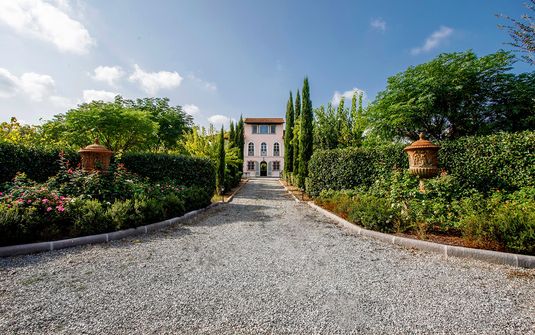
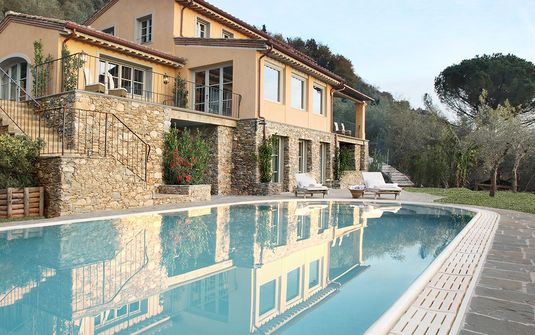
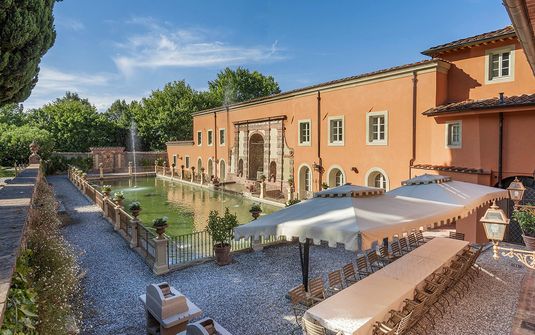
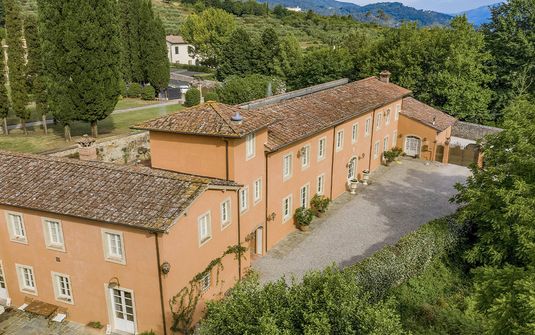
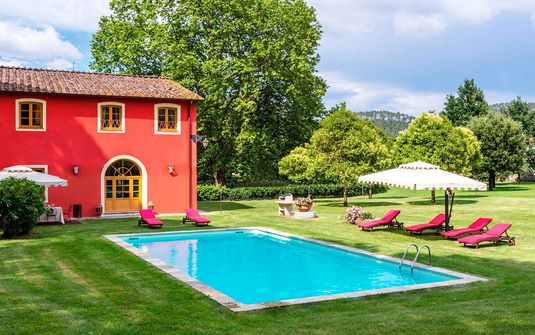
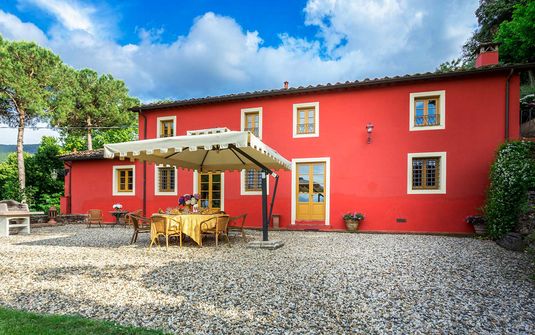
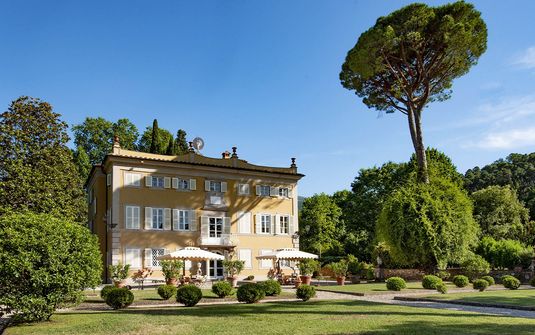
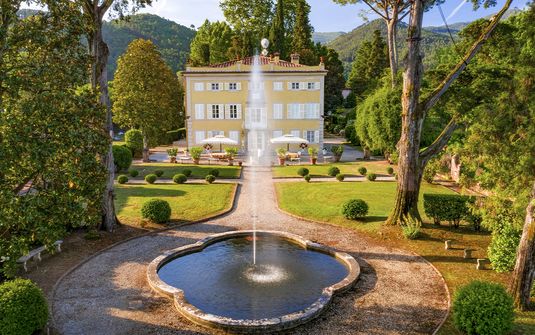
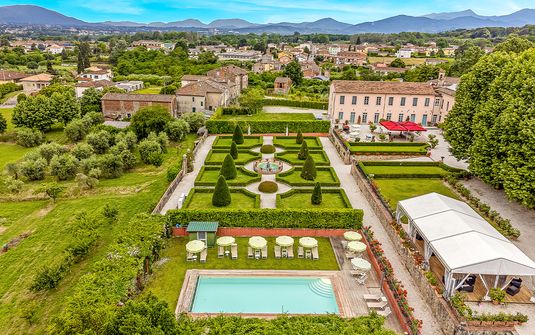
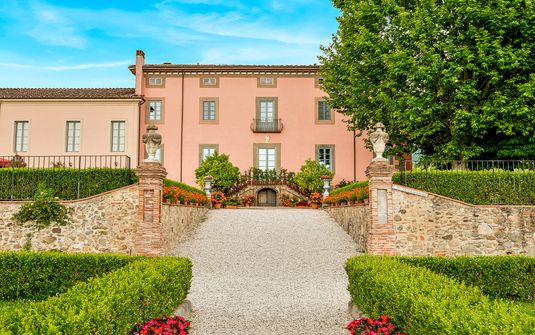
Outside the denser urban setting, the arrival sequence can become an important architectural experience. An approach through planted grounds gives the main building room to be read, while a formal façade can establish order in relation to the surrounding garden. A residence of this kind feels most coherent when the exterior composition and the interior plan reinforce one another. The sequence from entrance to shared rooms and private suites should remain clear, allowing the house to feel substantial without becoming difficult or excessively formal to inhabit.
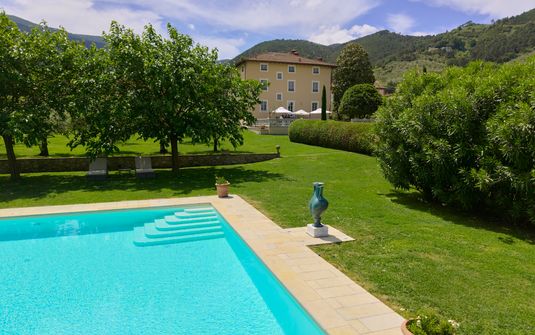
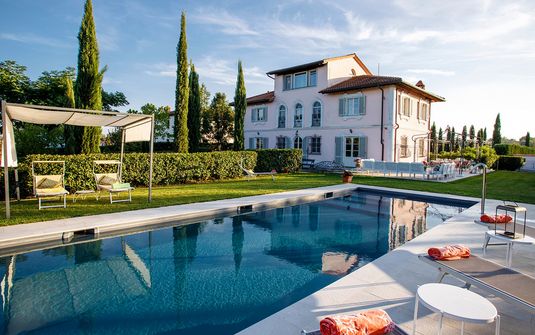
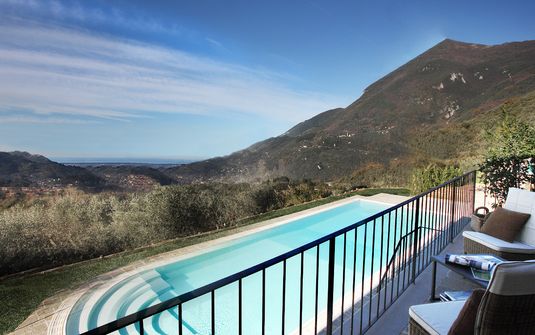
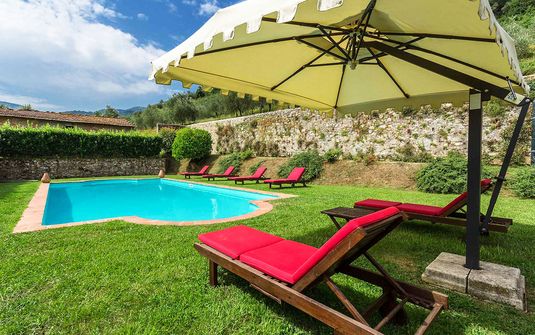
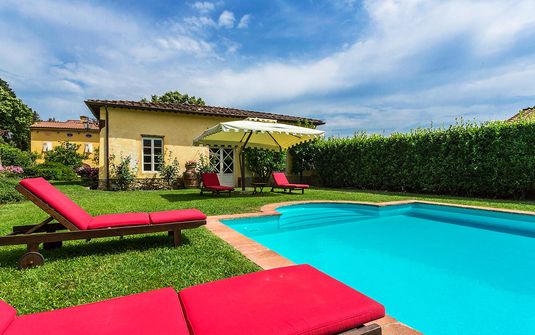
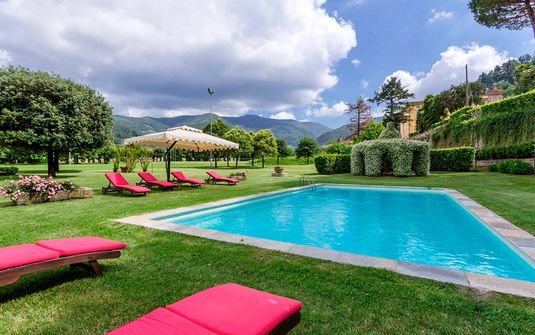
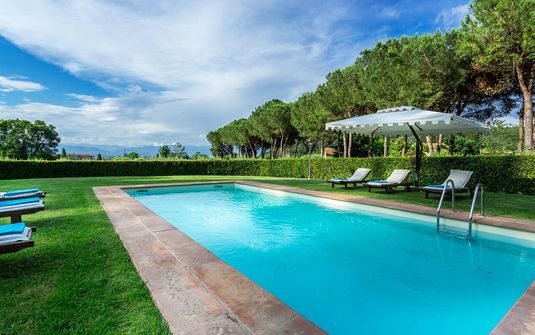
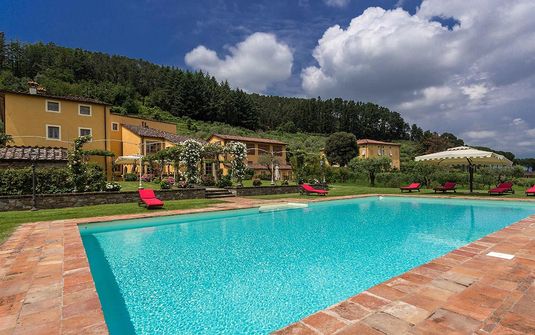
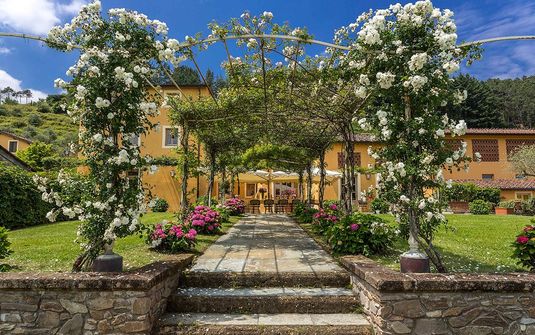
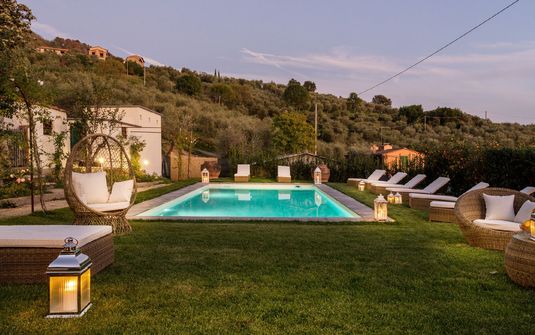
The garden introduces a transition from architectural order to the wider landscape. A defined terrace or planted axis near the principal façade may lead towards lawns, mature trees and a softer boundary beyond. These different exterior settings give the estate depth and a range of domestic scales. A larger communal area has a different role from a more protected corner beside a suite, allowing the household to remain connected while preserving places for personal withdrawal within the same private grounds.
Interiors with Architectural Continuity
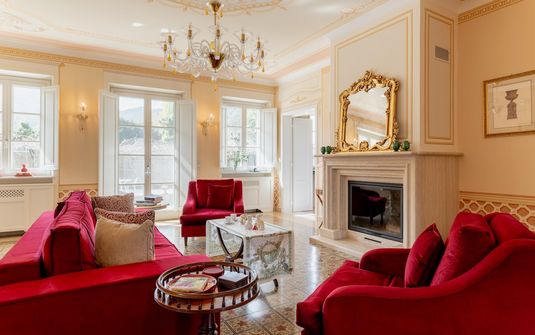
Older Lucca residences may retain generous room heights, substantial openings and original materials that give the interior a tangible sense of time. Restoration is most successful when those qualities remain legible while the rooms support present-day comfort naturally. Contemporary furniture and carefully placed artwork can bring ease to a historically expressive space without erasing its proportions. The home feels individual through the relationship between its architecture and furnishings, rather than through a uniform period treatment applied to every room regardless of scale or purpose.
A distinguished residence should have more than one comfortable center. The principal lounge may establish connection, while a smaller library-like room or quieter garden-facing interior allows another routine nearby. This range is especially important over a longer stay, when a household needs personal space as well as a generous shared environment. Architectural grandeur becomes practical through those quieter choices, making the residence a complete home rather than a series of impressive reception rooms supported by private accommodation of uneven quality.
Privacy Across Different Kinds of Address
In a city residence, discretion may depend on entrance sequence, window orientation and the relationship with neighboring rooms. At a country villa, boundaries and the arrangement of grounds become more prominent, but the same precision is needed. A large plot does not automatically protect every terrace, just as a contained court can provide considerable intimacy. The relevant quality is how privately the household can occupy the spaces it uses most often, not simply the outward scale or reputation of the property.
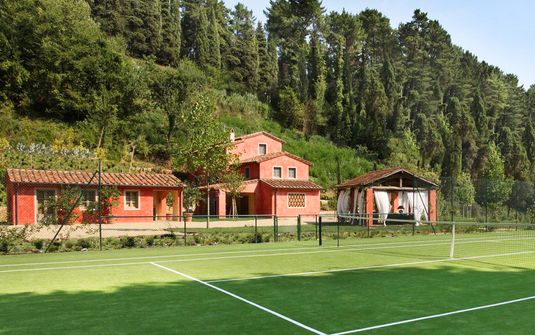
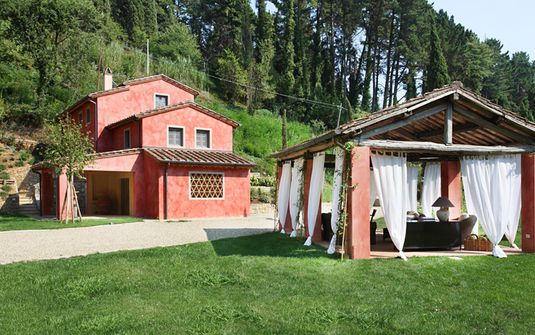
Suite distribution creates another level of independence. Bedrooms within a private corridor offer a closer domestic pattern, while separate floors, wings or guest accommodation can give couples and different generations greater autonomy. The appropriate plan depends on the group. A balanced residence gives secondary suites considered proportions, comfortable circulation and appropriate separation from communal areas, allowing every guest to establish a place of their own without fragmenting the household or concentrating the stay’s appeal in one exceptional principal room.
A Personal Lucchese Residence
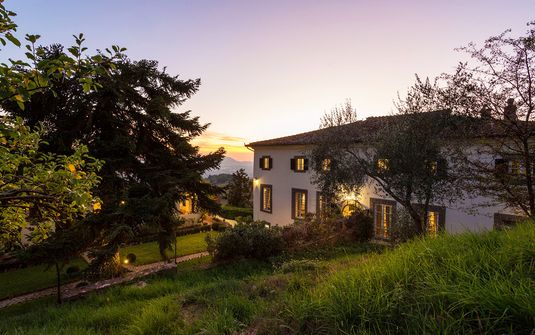
Lucca suits guests who appreciate a home whose character is revealed through proportion, enclosure and the relationship between its individual spaces. The details may be quietly specific: a view through an old opening, the depth of an entrance hall or a planted garden seen from a familiar room. These elements acquire meaning through repeated occupation, giving the address substance beyond a broad destination name and allowing the household to establish its own rhythm within a clearly defined architectural setting.
The city residence and the country villa each offer a compelling version of that experience when their privacy and domestic organization are thoughtfully resolved. The enduring appeal is the coherence of the whole home, with shared rooms, private suites and exterior settings that support one another. Lucca then provides a refined Tuscan stay with depth and independence, grounded either in the intimacy of its walled urban fabric or in the established villa landscape beyond it.


