




Rome: The Intimacy of a Private Residence Within a Layered City
Rome gives a private stay an architectural setting of unusual depth. Substantial façades, enclosed courts and buildings shaped by several periods create a city in which the public exterior often reveals only part of the domestic world behind it. Within Italy, a Roman address can offer a particularly rich relationship between history and everyday residential comfort, allowing the household to inhabit rooms with a clear identity rather than simply occupy a position beside a celebrated urban backdrop.
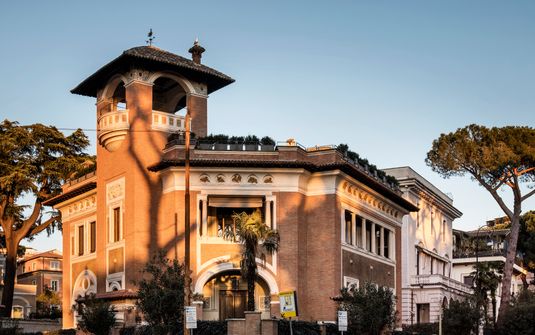
The range extends from generous apartments in older buildings to separately entered houses and more garden-led residences within the wider city setting. These forms create different experiences of privacy. A palazzo apartment may concentrate its character in ceiling height, original proportions and an interior court, while a detached property gives greater presence to the sequence between entrance, grounds and rooms. The most convincing choice is one whose architecture supports the household naturally without requiring every space to maintain the same formal tone.
The Threshold Between Street and Home
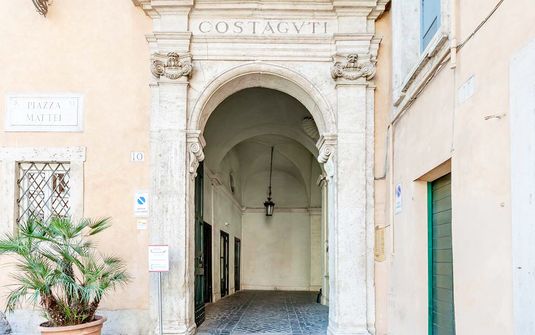
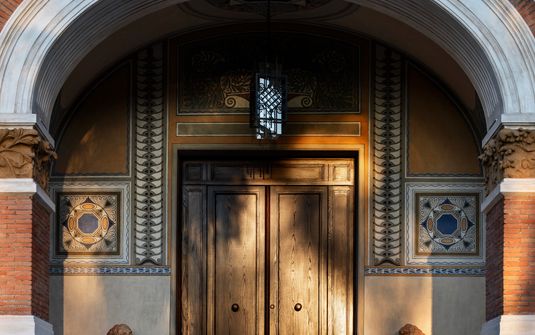
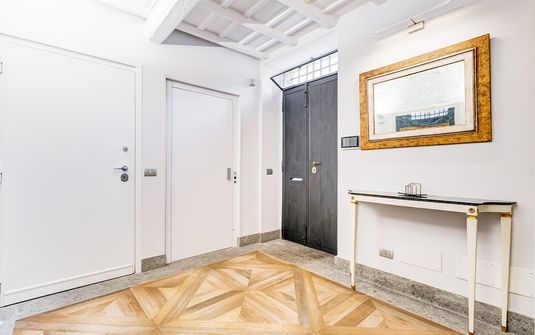
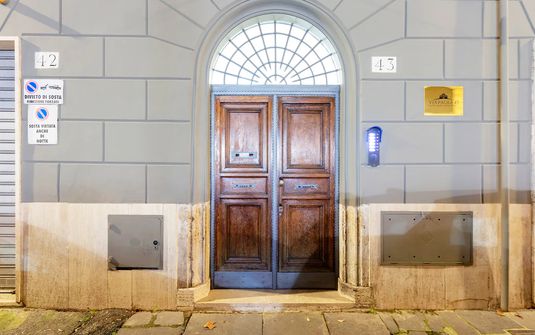
A substantial doorway and entrance passage can establish a deliberate transition from the surrounding city. Beyond it, a court, stair or protected hall may create another layer before the principal interiors are reached. This sequence gives privacy an architectural form that is more nuanced than remoteness. The house or apartment remains connected to Rome, but the building defines a private world whose scale and atmosphere become apparent gradually rather than exposing the whole residence at the first threshold.
The relationship with the street also changes across a plan. A principal salon may face neighboring façades and the wider urban composition, while a bedroom or smaller sitting room turns towards a more contained interior outlook. Different light, proportions and degrees of enclosure give those rooms distinct roles. A home gains richness when these conditions are preserved, allowing the household to choose among several atmospheres rather than treating every interior as a repeated version of the most outward-looking reception space.
The Court as an Interior Landscape
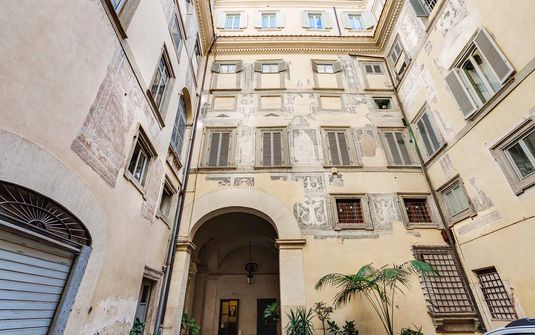
A Roman courtyard can provide a strong domestic reference through its masonry, architectural rhythm and enclosed vertical space. Where planting is present, it introduces another texture without replacing the building’s underlying structure. A room facing such a setting may feel more visually protected than one with a broader urban panorama. The appeal lies in the exact proportions and neighboring sightlines, making the court a meaningful part of the residence rather than simply a picturesque feature attached to its description.
Private gardens and terraces, where included, offer a different relationship with the city. A planted exterior area can create an intimate foreground beyond a reception room, while a higher terrace participates in the surrounding pattern of roofs and façades. These spaces are most persuasive when their scale feels continuous with the interior. Their boundaries and connection with adjacent buildings determine how privately they can be occupied, giving the household a defined threshold rather than an exposed platform assumed to be secluded because of its outlook.
Historic Rooms with a Present-Day Domestic Life
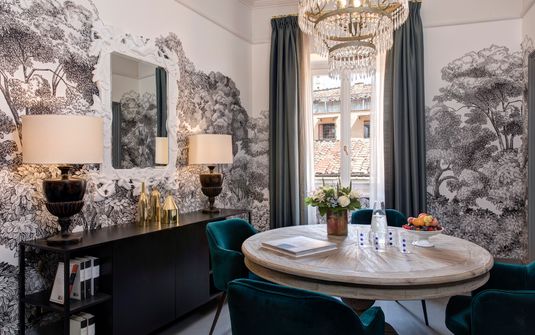
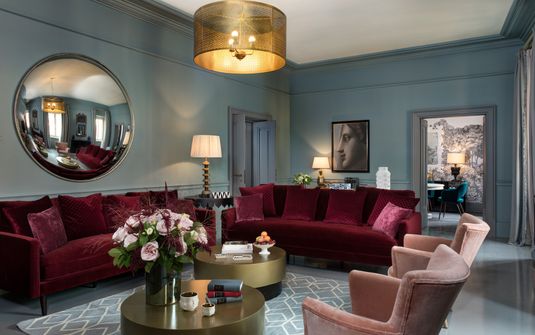
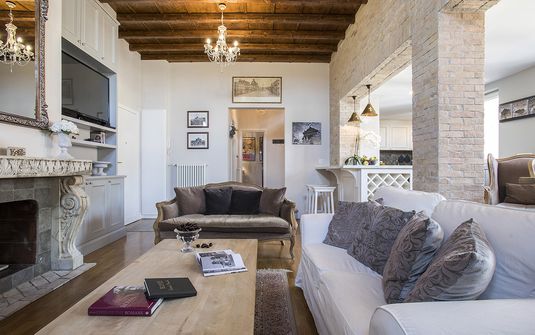
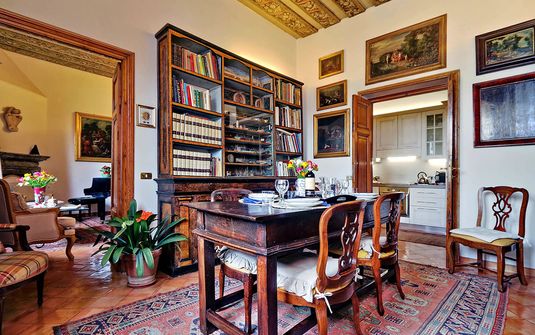
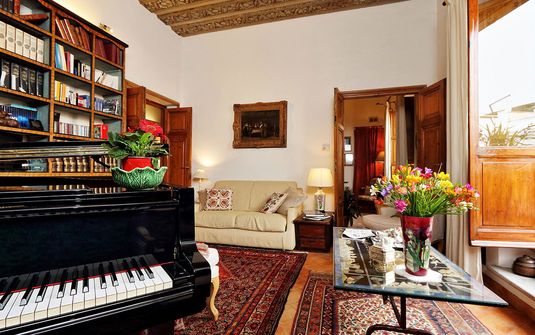
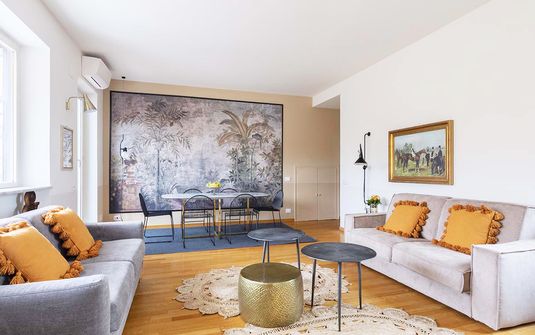
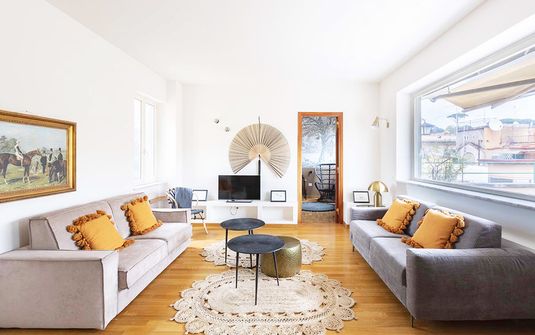
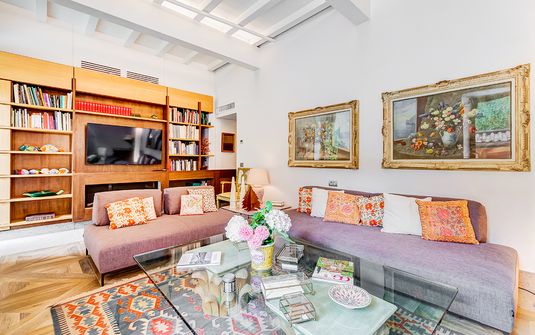
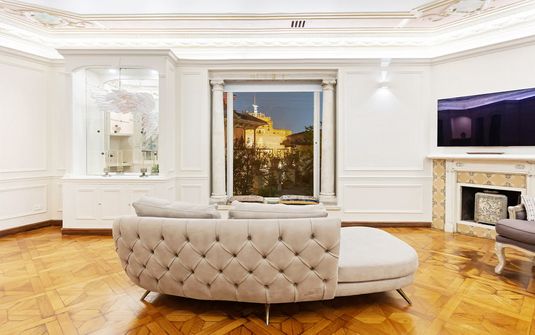
Older residences may retain generous room heights, substantial openings, original floors or architectural detailing that gives the interior a tangible sense of continuity. Such features are most successful when they remain part of a comfortable home. Contemporary furniture and carefully placed artwork can bring ease to a historically expressive room, allowing the architecture to retain its depth without demanding a fully period-based decorative scheme. The residence feels personal through the quality of its proportions and the way its individual rooms are inhabited.
A principal salon can establish the scale of a Roman apartment, but quieter spaces often determine how well the home supports a sustained stay. A library-like room, a smaller lounge or an inward-facing study introduces another rhythm nearby. This variety allows different members of the household to remain together without requiring them to share one continuous communal environment. The architecture becomes practical through these distinctions, making grandeur compatible with ordinary comfort rather than an atmosphere maintained only for formal occasions.
A Balanced Plan for Private Suites
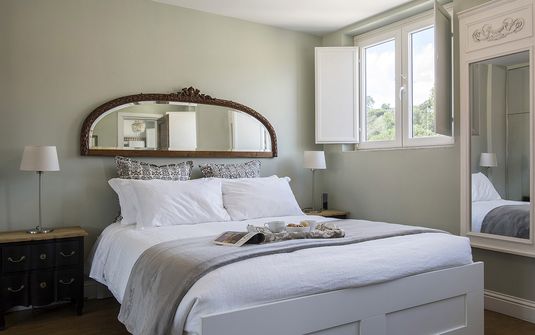
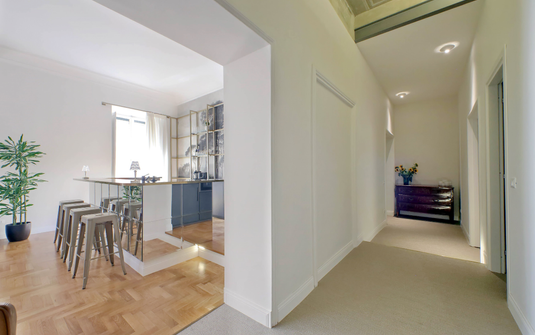
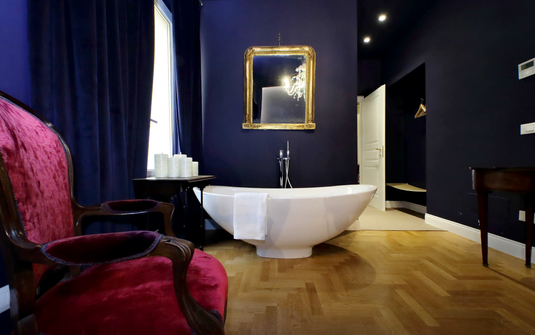
Suite distribution should reflect the household rather than a simple count of bedrooms. A clear private corridor creates one pattern of domestic life, while accommodation in separate parts of a larger plan provides another degree of independence. The quality of a room extends beyond dimensions to its outlook, acoustic separation and relationship with shared areas. A distinguished residence gives secondary suites considered comfort, ensuring that the whole group can settle naturally into the home instead of relying on one exceptional bedroom to define the stay.
Arrival and ancillary spaces contribute to the same discretion. A protected hall can keep the principal living areas from functioning as general circulation routes, while practical secondary rooms allow household support to remain unobtrusive where it is arranged. These qualities are specific to each property, but their value becomes evident through daily occupation. The plan should allow guests to move between communal and private spaces with ease, preserving personal boundaries without fragmenting the residence into disconnected rooms.
A Personal Roman Address
The luxury of a private stay can be quietly specific: the depth of an old doorway, the view across a planted court or the familiar proportions of a room at the center of the household. These details acquire meaning over time and give the address a character beyond its location. The residence does not need to compete with Rome’s wider architecture. Its role is to provide a complete domestic environment in which the city remains present without determining every aspect of the stay.
A historic apartment and a more independent house can each offer that experience when their privacy, proportions and internal organization are thoughtfully resolved. The lasting distinction is the coherence of the whole residence, with generous shared rooms supported by comfortable private retreats. In Rome, this creates an urban stay with depth and individuality, allowing the household to establish its own rhythm within a built landscape whose layers remain an essential part of the home’s identity.


