




Corsica: Private Villas Between Mountain and Mediterranean
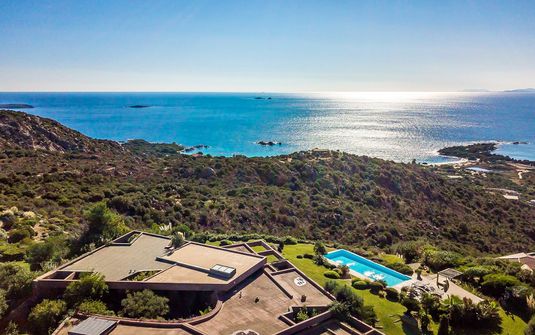
Corsica has a landscape of unusual compression: a mountainous interior, deeply articulated coastlines and villages whose stone buildings appear closely bound to the terrain. Its identity within France is unmistakably individual. A private villa here can place the household between contrasting worlds, with the sea opening one horizon while wooded slopes, rock formations and maquis vegetation give the immediate surroundings a more textured and distinctly island character.
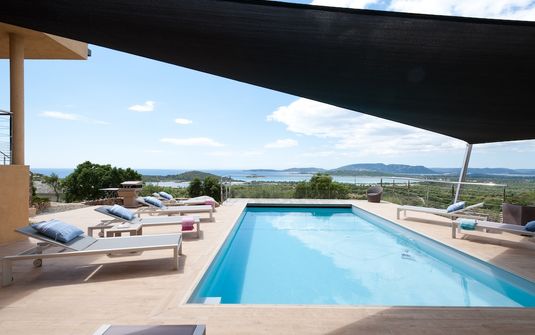
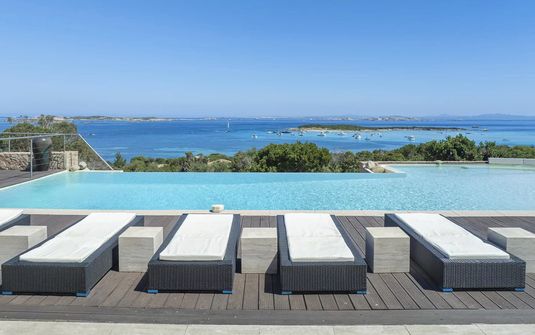
The appeal is not confined to a single coastal image. Broad bays, sheltered inlets and more elevated residential settings offer different relationships with the Mediterranean. Inland, the land becomes more emphatic, and even a sea-facing house may retain a strong mountain backdrop. This combination gives Corsica a depth that extends beyond the view from a pool terrace. The residence can feel part of a substantial natural landscape rather than simply positioned beside an attractive stretch of shoreline.
An Island with a Strong Material Identity
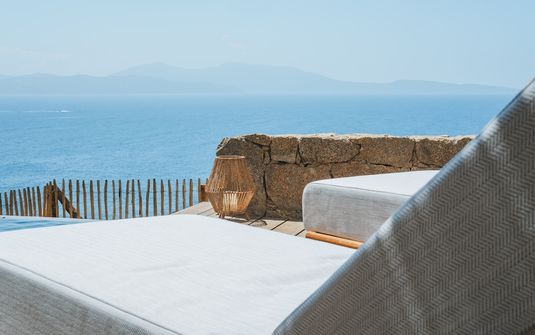
Rock is central to the visual experience. Granite formations shape many coastal settings, while other parts of the island introduce different geological colors and textures. The contrast between exposed stone, low vegetation and the water gives the landscape a distinctive clarity. A house that uses a restrained palette can allow those variations to remain visible, letting the surroundings establish the atmosphere instead of competing with them through excessive exterior decoration or an unrelated architectural statement.
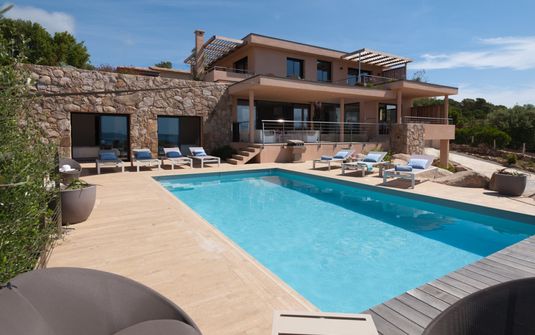
Corsican settlements contribute another layer of character through masonry, compact building patterns and rooflines adapted to their sites. Historical Mediterranean influences are present without making the island feel interchangeable with another coastline. In a traditional residence, deep walls and contained openings can create a sense of protection. A contemporary villa may interpret the same relationship through solid stone volumes, shaded exterior spaces and glazing placed to frame particular aspects of the surrounding land and sea.
The Maquis as a Residential Setting
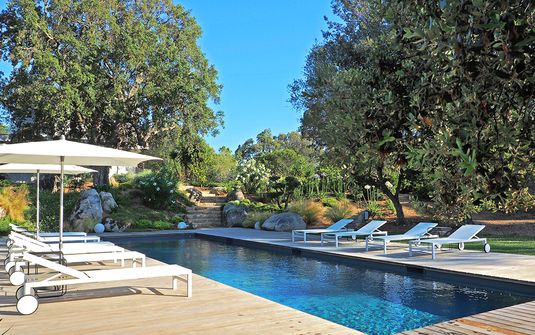
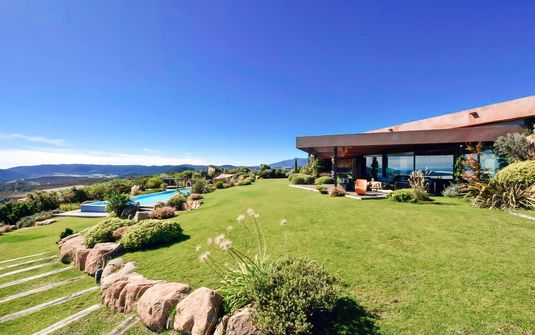
The maquis introduces a landscape at close range, with dense shrub vegetation, irregular textures and an appearance that resists formal symmetry. Around a private house, it can create visual depth and help the architecture settle into the site. A carefully defined garden may offer a gentler foreground, but the transition to the wider island vegetation often remains an important part of the setting. The strongest exterior compositions respect that contrast rather than erasing it entirely.
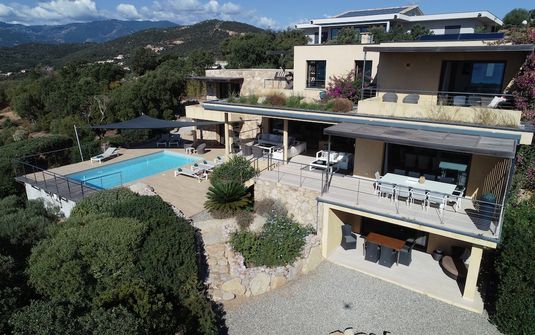
The slope of the land also influences privacy. A raised position can open long coastal perspectives, but it may expose terraces to neighboring properties on higher ground. A more enclosed plot can offer a different kind of discretion, using stone boundaries, planting and the orientation of the rooms to establish a protected domestic environment. The quality of a Corsican address lies in the particular resolution of these conditions, not in elevation or proximity to the sea alone.
A Villa That Belongs to the Island
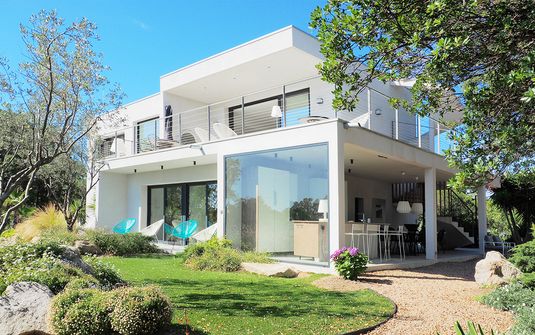
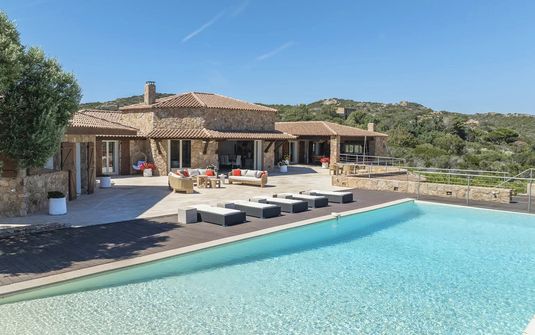
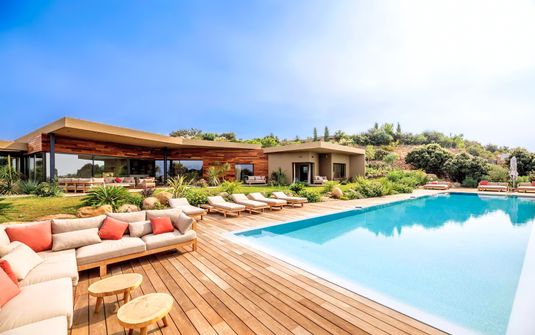
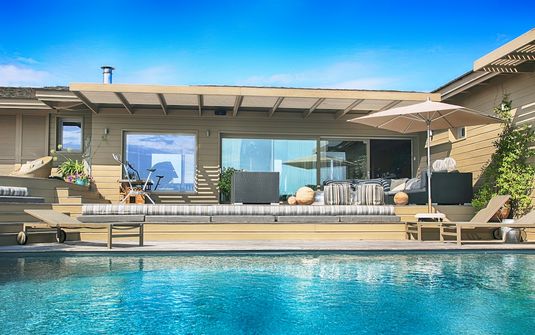
Contemporary homes can be especially persuasive when they use simple forms and natural materials to establish continuity with the site. Broad openings connect living rooms to terraces, while solid walls retain a necessary sense of enclosure. Traditional properties offer another experience, with the texture of masonry, more intimate rooms and a gradual sequence between interior and exterior. Both approaches can provide considerable refinement when the architecture allows the island’s character to remain present.
The interior should bring a quieter scale to the surrounding landscape. Pale finishes, tactile fabrics and considered joinery can create a composed background for changing sea views, while a more richly layered scheme may suit a substantial stone house. The distinction is not between modern and traditional luxury, but between a residence with a coherent identity and one dependent on isolated visual effects. Rooms become more comfortable when their proportions and furnishings support sustained occupation rather than a brief first impression.
Separate Spaces Within a Shared Retreat
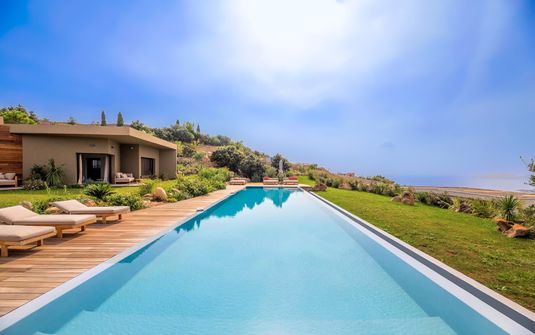
Corsican villas may be organized as a single house or as several connected volumes following the terrain. The latter arrangement can provide useful independence, allowing suites to retain their own outlooks and exterior thresholds. A more compact plan creates a closer household atmosphere. For groups staying together, the relationship between these private areas and the main living spaces is fundamental, because it determines how naturally the residence accommodates both connection and withdrawal.
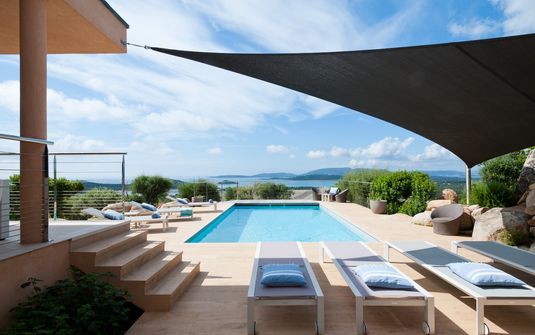
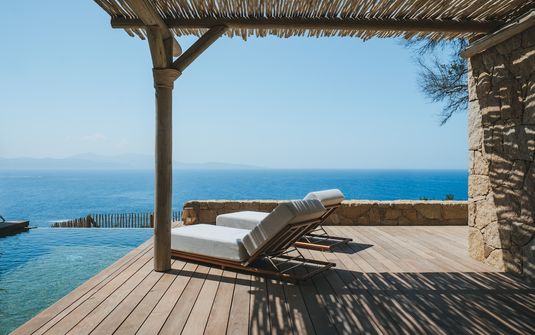
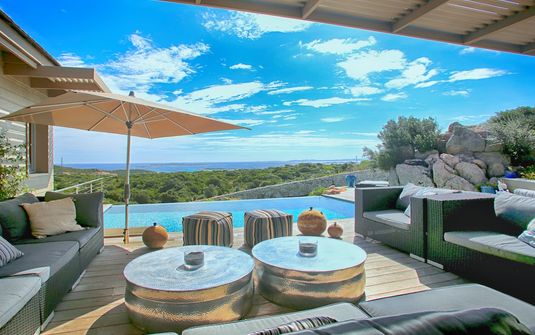
Exterior rooms can be equally important to that balance. A shaded terrace beside the principal lounge offers a communal center, while a smaller sheltered court may give a suite greater autonomy. The most successful arrangements create several scales of space rather than one continuous exposed platform. This is particularly valuable in a landscape where sea views can be expansive: the household benefits from intimate places within the broader panorama, with architecture providing a sense of protection and belonging.
A Mediterranean Stay with Depth
Corsica’s residential appeal comes from the meeting of natural contrasts. The sea gives openness, the mountains provide weight and the island’s stone and vegetation bring detail close to the house. A private villa can hold those elements in balance, offering an independent setting whose character is inseparable from its location. The experience feels most convincing when the residence is not treated as a self-contained object, but as part of the wider composition of coast, slope and interior.
For guests seeking a Mediterranean address with a pronounced sense of place, Corsica offers more than a familiar coastal aesthetic. It provides a setting in which architectural restraint, substantial privacy and a richly varied landscape can reinforce one another. The resulting stay is personal and grounded, with the house serving as a comfortable center from which the island’s particular textures and perspectives remain present throughout the private residential experience.


